
Homes in Coral Gables typically fall into two distinct styles shaped by different eras. Some were built decades ago, with clear room layouts and fixed uses for each space, while others are newly built, with open plans and fewer limits on how rooms are used—but both exist across Coral Gables today.
When you’re considering homes in Coral Gables, the decision becomes clearer when you think beyond age or style—how you move through the home, how much change you want to make after you move in, how comfortable you are with upkeep and planning. When you focus on those basics, it’s easier to see which type of home fits how you live now.
HISTORIC HOMES IN CORAL GABLES: LIVING INSIDE A CONTINUING STORY
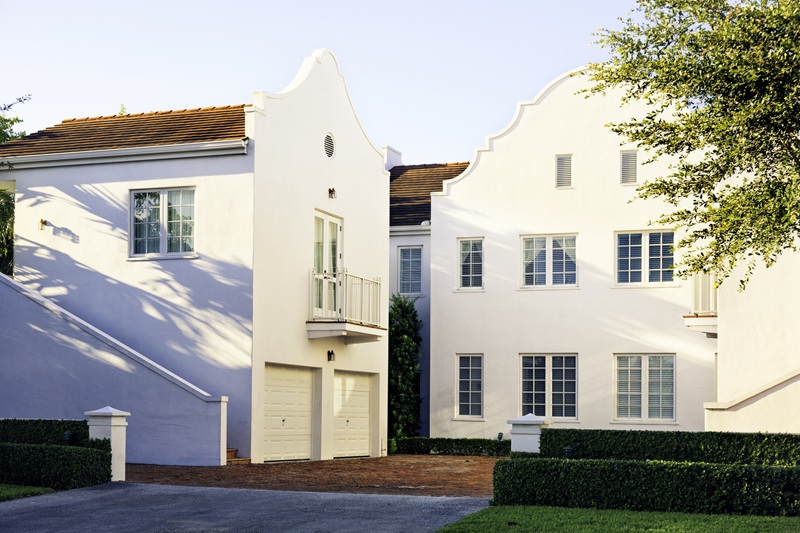
Architectural features seen throughout historic homes in Coral Gables still set the visual tone for many residential streets.
Many of the historic homes in Coral Gables were built with the same planning mindset that shaped the city’s early development. If you’ve spent time around places like the Coral Gables City Hall or the Merrick House, you’ve already seen the core ideas at work: clear proportions, durable materials, and spaces designed to hold their shape over time.
These design principles not only shaped civic buildings but also extended to residential streets, where homes were built with fixed layouts, clear room divisions, and long-term use in mind. They often feature enclosed interiors, defined facades, and materials engineered to withstand decades of use. You also see it in public spaces like the Venetian Pool, which was designed to be maintained and reused rather than replaced.
Inside homes, rooms are typically separate and clearly defined. Living and dining areas are typically separate, with hallways connecting rooms instead of relying on one open, continuous space. This is a layout that reflects a traditional approach to organizing daily activities, with each room designed to serve a specific function.
For buyers considering homes in Coral Gables with historic character, ownership is less about altering the architecture and more about becoming a steward of a timeless design. Through these historic homes, you’re stepping into a home with a clear way of functioning and a place within the neighborhood’s longer story, where care, maintenance, and thoughtful updates are part of keeping that continuity intact.
NEW CONSTRUCTION IN CORAL GABLES: ADDING A MODERN CHAPTER
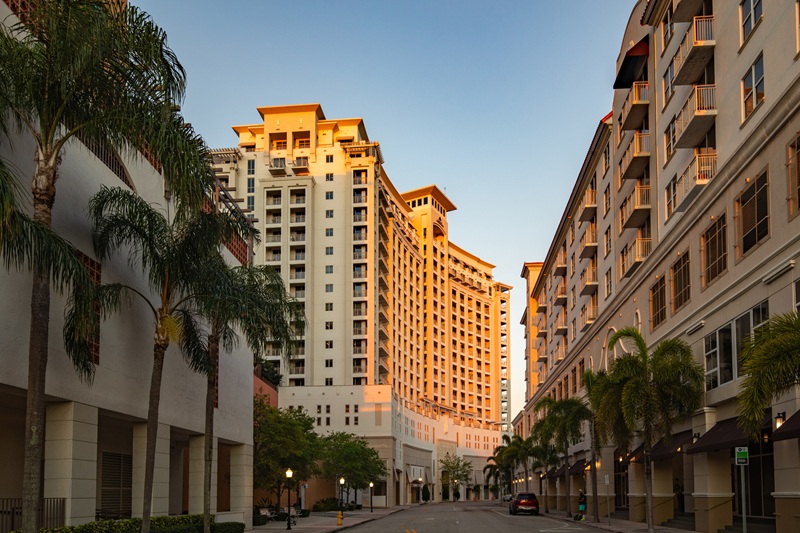
New construction in Coral Gables, FL, takes many forms, including newer residential buildings near the city core.
New construction in Coral Gables, FL, rarely begins with a blank slate. Most new homes and buildings are added to established streets, surrounded by older houses, civic buildings, and long-standing commercial corridors. As a result, new construction here is shaped as much by its surroundings as by modern design priorities, which influence how these homes are planned.
You see this pattern in and around the downtown core, including Ponce de Leon Boulevard, the commercial backbone of Coral Gables. Recent projects like Ponce Park Residences, Merrick Manor, and The Plaza Coral Gables pair contemporary interiors with exteriors that are reviewed for scale, setbacks, and composition so new buildings fit within the surrounding streetscape.
Inside, floor plans prioritize open living areas, centrally located kitchens, and flexible rooms that can serve as dining, work-from-home, or secondary living spaces without structural changes.
For buyers considering newly built homes in Coral Gables, the appeal is stepping into a space where the layout, storage, and living areas already function seamlessly, with no walls to remove or rooms to rethink.
HISTORIC HOMES VS. NEW CONSTRUCTION: FINDING THE RIGHT FIT
Once you’ve seen how historic homes and new construction function day to day, the choice between the two stops being about appearance and starts being about effort, flexibility, and how predictable you want ownership to feel in the early years. Here’s a direct side-by-side view you can use to weigh your options:
| Historic homes | New construction | |
|---|---|---|
| How rooms are used | Rooms are separate and built for specific purposes | Rooms flow together and can serve multiple uses |
| Day-to-day upkeep | Regular maintenance is part of ownership | Fewer maintenance needs early on |
| How easy it is to make changes | Changes often take planning and may be limited | Changes are usually easier right after move-in |
| When costs show up | Expenses tend to appear gradually over time | Most major costs are known upfront |
| Ability to adapt the layout | The original structure limits layout changes | Layouts are easier to adjust |
| Insurance and storm prep | Coverage may require updates or extra steps | Coverage is usually more straightforward early |
The choice becomes clearer when you think about how you prefer to live and manage a home over time:
- Historic homes often appear to buyers who value living in a home with an established structure, history, and role within the neighborhood. Ownership means enjoying a place that already has definition and continuity, where care and updates build on what’s there rather than starting from scratch.
- New construction in Coral Gables, FL, often fits buyers who want a clean starting point. These homes tend to support flexibility, fewer early decisions, and a more straightforward year as routines and priorities settle into place.
FAQs
Do all historic homes in Coral Gables fall under preservation rules?
No. Only homes that are officially designated as historic landmarks or located within a local historic district in Coral Gables are subject to preservation review and requirements for exterior changes under Coral Gables’ Historic Preservation Ordinance. Many older homes that are not designated do not face those specific preservation review requirements.
Do historic homes or new construction resell faster in Coral Gables?
Neither consistently sells faster. Resale speed usually depends on price, condition, and location, not on whether a home is historic or newly built.
Where are most new construction homes located in Coral Gables?
New construction in Coral Gables appears throughout the city rather than being strictly clustered in one small area. You’ll find newly built single-family homes and custom infill projects in many established residential neighborhoods (e.g., near Old Cutler, Riviera, San Vicente, and Catalonia Ave.), as well as new condo constructions and mixed-use projects along major thoroughfares like Ponce de Leon Blvd and near central commercial nodes.
Do property taxes differ between historic homes and new construction in Coral Gables?
Taxes are based primarily on assessed value, not whether a home is historic or new. New construction often starts with a higher assessment, while some designated historic homes may qualify for tax reductions if enrolled in a preservation program.
DECIDE WHAT WORKS FOR YOU IN CORAL GABLES
Choosing between homes in Coral Gables comes with real decisions, not just preferences. Local rules, neighborhood patterns, and how homes are built here can shape your options early, and having clear guidance helps you move forward with less stress.
That’s where The Lani Group comes in. As a Miami native with decades of experience working in Coral Gables, Lani Kahn Drody understands both historic homes and new construction. Her approach is practical and focused on how you plan to live.
If you’d like to talk next steps, you can reach Lani at 305.520.5420 or via email—a short conversation can help you get clarity and decide how to move ahead.